A $5,000 Interceptor for a $40,000 Drone
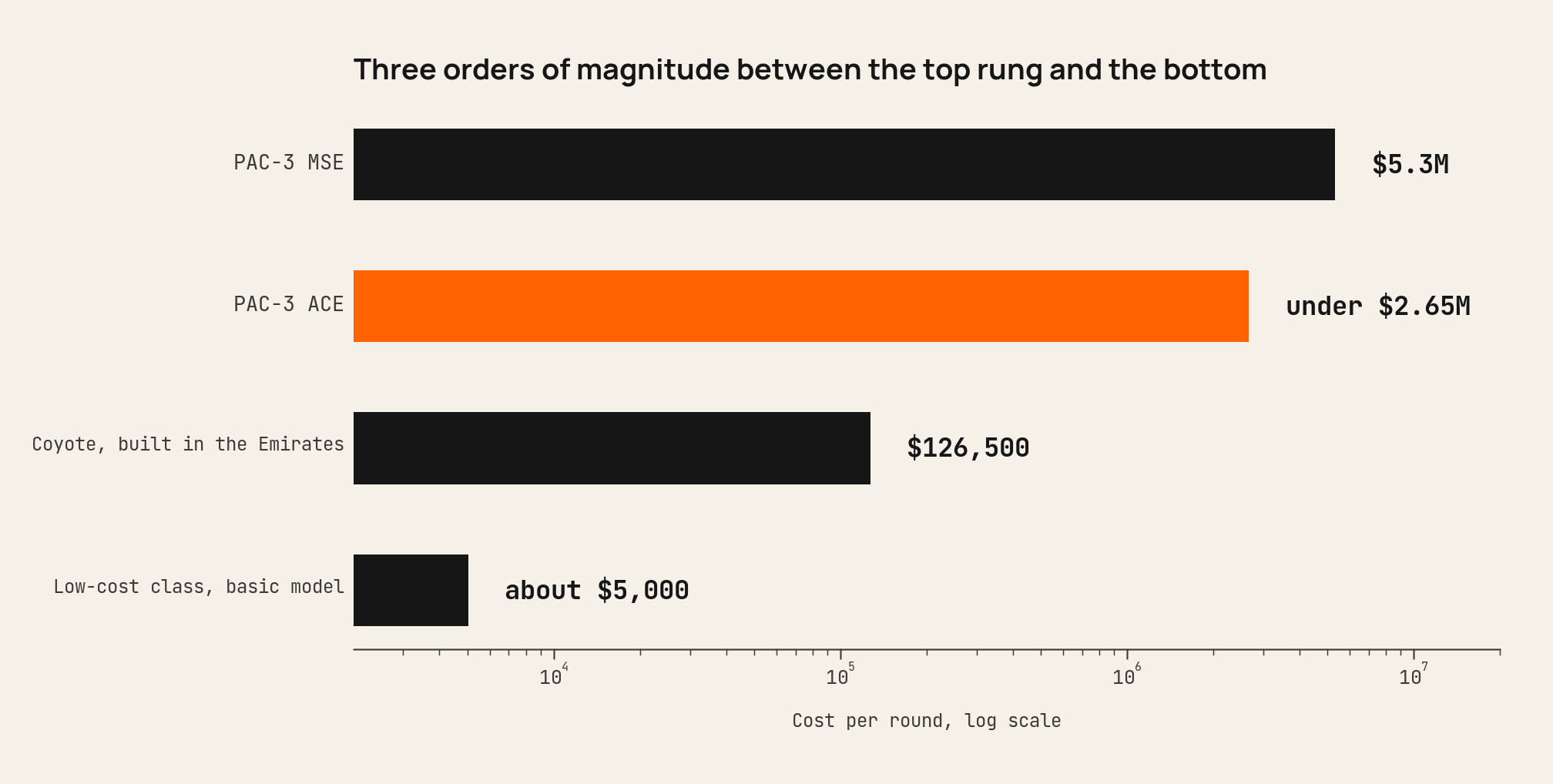
A Shahed-type attack drone costs about $40,000. A PAC-3 MSE round costs roughly $5.3 million. Guardian costs about $5,000 and assembles from printed parts and off-the-shelf chips. Cost per round gets the attention. Production rate decides the outcome.
The full piece is worth your time. What follows is the arithmetic underneath it, and the limits of that arithmetic, which matter just as much.
The number that broke air defense
An Iranian Shahed-type drone costs about $40,000 to build.
The interceptors most defenders have been firing at those drones cost millions of dollars each. The US Army’s FY2027 budget request puts a PAC-3 MSE at roughly $5.3 million per round.
Run that exchange even once and it looks like a bad trade. Run it across a sustained campaign and it stops being a trade at all, because the defender exhausts a scarce, slow-to-build munition against an attacker who can buy more of theirs.
Cost per round runs across three orders of magnitude. Sources: US Army FY2027 budget request via Army Recognition on PAC-3 MSE and PAC-3 ACE; The New York Times, August 23 2026, on the Coyote estimate from a Center for a New American Security report and on the low-cost class.
The scale comes from the Times’ reporting. Since February, more than 2,200 Iranian drones and over 500 ballistic missiles have been fired at targets in the Emirates. The attacks shut down an oil refinery and destroyed two data centers.
Every one of those drones had to be stopped by something. The price of that something decides how long a defender can keep stopping them.
What we built, and why it costs what it costs
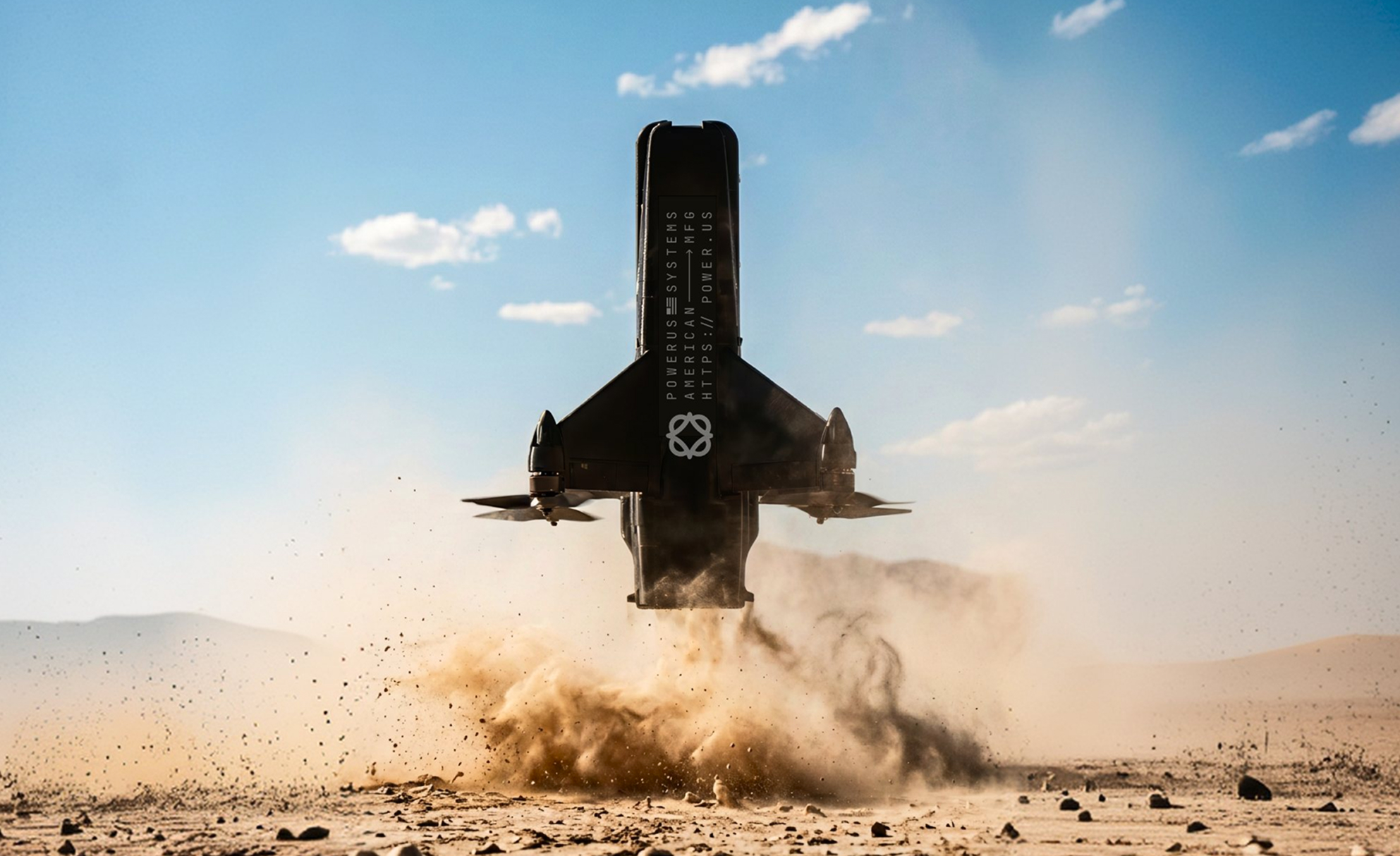
Guardian, the interceptor we developed, costs about $5,000.
It is based on a Ukrainian design proven against Russian Shahed drones. It flies at speeds of up to 200 miles per hour. It snaps together from 3-D printed components and off-the-shelf chips.
None of those are cost-cutting decisions taken after the fact. They are the design. A part you print is a part you do not tool for. A chip you buy off a shelf is a chip you do not qualify a bespoke supply chain for. An airframe that snaps together is an airframe an assembler can be trained on in days.
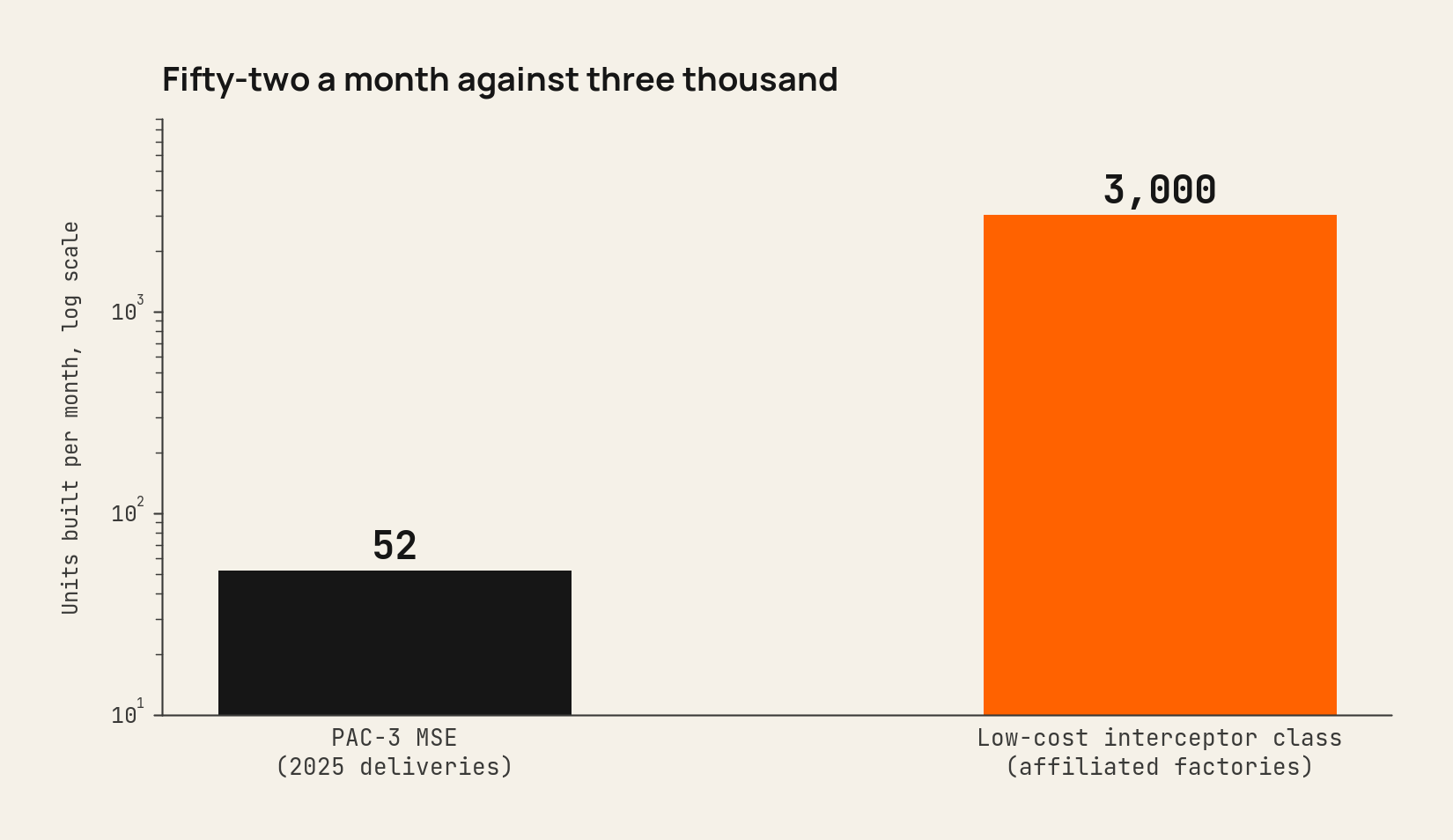
The Times reports that workers in a warehouse in the Emirates assemble roughly 30 a day, with a goal of 100. Factories affiliated with Powerus make roughly 3,000 interceptors a month. The plan is a network reaching 15,000 a month worldwide by mid-2027.
Production rate is the second number, and it may be the more important one
Cost per round gets the attention. Rate decides the outcome.
Lockheed delivered 620 PAC-3 MSE interceptors across 2025, an average of about 52 a month, and a framework agreed in January 2026 aims to lift annual capacity toward 2,000. Those are hard, expensive, exquisite rounds and building them faster is genuinely difficult.
An interceptor assembled from printed parts and commodity chips lives on a different curve. The claim here is narrow: it is about which weapon can be replaced at the rate a drone campaign consumes it, and nothing about which one is better.
Monthly output, two classes of interceptor. Sources: Army Recognition on PAC-3 MSE deliveries; The New York Times, August 23 2026, on affiliated low-cost production.
Why the factory moves
The traditional model is to build in the United States, obtain export approvals, and ship. Every step is measured in months. A country absorbing drone attacks measures its problem in days.
So the model is co-production. Rather than build new plants at home and export the weapons, we partner with manufacturers in the regions that need them and supply the training, the components and the software. On August 24, 2026 we announced that Guardian manufacturing has begun at a dedicated facility in the Gulf Cooperation Council region, through a multi-year partnership with a regional defense manufacturer.
We are not alone in this and that is a healthy sign. Raytheon Emirates announced local Coyote production with the UAE on October 31, 2025, at an estimated $126,500 per interceptor according to a Center for a New American Security report the Times cites. Lockheed Martin introduced a low-cost interceptor of its own on July 20, 2026, stating it will collaborate with American and European partners on development and production.
When the largest defense contractor in the world moves the same direction, the category is real.
What Guardian does not do
This is the part that usually gets left out of a company’s own write-up, so here it is plainly.
Guardian does not intercept ballistic missiles. It is built for midsize drones. A defense analyst at the Center for a New American Security told the Times that low-cost interceptors are complements, not substitutes, for systems like the PAC-3, and she is right.
She also made a point worth sitting with. Iran is most likely rebuilding its missile stockpile, and may field jet-powered Shahed variants that fly considerably faster than the current generation. A cheap interceptor sized to the current generation of threat has to keep pace with the next one.
Anyone selling a single system as complete air defense is selling something. The narrower claim is the true one. A defender should not have to spend millions per shot to stop a $40,000 drone, and now there is another option on the shelf.
The demand is contracted
Aureus Greenway Holdings Inc. (Nasdaq: PUSA) and Autonomous Power Corporation, doing business as Powerus, announced a commercial contract valued at approximately $22.3 million. It covers protection of critical oil and gas infrastructure in Iraq. In August 2026 the company signed a contract worth up to $90 million to supply interceptors to the US Air Force.
The Times covered more than the math. It follows the founding story, which starts with a destroyed warehouse of humanitarian supplies in Ukraine. It covers the competitors working the same problem, and what analysts expect Iran to field next.
Read it in full: https://www.nytimes.com/2026/08/23/business/powerus-counter-drone-iran-war.html