Made in USA Drones: Four Tests Behind the Label
"Made in USA" on a drone can mean four things: the FTC's all-or-virtually-all label rule, the federal 65 percent component-cost test, NDAA limits on critical parts, or a model listed on DCMA's Blue List. A drone can pass one and fail another. Here is what a buyer should ask for.
Key Takeaways
An unqualified Made in USA label needs “all or virtually all” US content. That is the Federal Trade Commission’s standard, and it covers online listings as well as packaging.¹ ²
A federal purchase uses a different test. In 2026 a domestic end product must be made in the US, with more than 65 percent of its component cost from domestic components.³
NDAA compliance is about where critical parts come from. It bars flight controllers, radios, cameras, gimbals, ground stations and software made in four named countries.⁴
The Blue List vets specific models. The Defense Contract Management Agency’s portal listed 78 drone platforms and 245 components on October 12, 2026.⁵
A buyer should ask which test a label passed, and for the documents behind it. Federal security guidance tells critical-infrastructure owners to find out where a drone is manufactured.⁹
A made in USA drone is one whose maker can show it meets a defined test of US origin. In practice four such tests exist, each set by a different body, and a drone can pass one and fail another.
That matters to anyone buying drones for a utility, a refinery, a port, a data center or a state or local agency. The label on a product page rarely says which test it means. The difference decides whether a drone fits a federal contract, a security policy or only a marketing claim.
The FTC label test: all or virtually all
The Federal Trade Commission sets the rule for what a seller may print. An unqualified Made in USA claim has to meet three conditions in the rule:²
Final assembly or processing happens in the US.
All significant processing happens in the US.
“All or virtually all ingredients or components of the product are made and sourced in the United States.”
The FTC’s guidance puts the last condition in plain terms: a product should contain no foreign content, or a negligible amount.¹
The rule reaches catalogs and online listings, and a seller who breaks it faces civil penalties.¹ ²
A seller with foreign parts has two lawful options. It can make a qualified claim, such as “60% U.S. content” or “Made in USA of U.S. and imported parts,” in the FTC’s examples.¹ Or it can say “Assembled in USA” when the main assembly in the US is substantial. The product’s last substantial transformation must also have happened there.¹
So the exact wording on a product page is the first clue. “Made in USA” and “Assembled in USA” are separate claims under the FTC’s rules, with separate requirements.
The federal purchase test: more than 65 percent
A federal agency buying a drone applies the Buy American rules in the Federal Acquisition Regulation. A manufactured item counts as a domestic end product if it is made in the US and its domestic components cost more than 65 percent of all its components.³ That threshold covers items delivered from 2024 through 2028, and it rises to 75 percent for deliveries from 2029.³
Commercial off-the-shelf items are the main exception. For them the component-cost test is waived, and only US manufacture is checked.³
The two tests measure different things. The FTC asks whether foreign content is negligible. The federal rule asks whether domestic content clears a cost share. A drone at 70 percent domestic component cost can count as domestic for a federal purchase and still fall short of an unqualified Made in USA label.
Defense purchases follow a supplement to these rules, so a defense buyer should confirm its threshold in its own contract terms.
NDAA compliance is a test of parts
“NDAA-compliant” is the term buyers use for a drone that meets the drone procurement restriction in the annual defense authorization law. The Defense Contract Management Agency, known as DCMA, sets out the definitions on its Blue List policy page.⁴
The restriction looks at where critical parts come from. DCMA names eight: “flight controllers, radios, data transmission devices, cameras, ground control stations, operating software, network connectivity, and gimbals,” in its words.⁴ None may come from four named countries, or from a company based in one. The four are China, Russia, Iran and North Korea.⁴
This is an exclusion test, and it sets no minimum of US content. A drone built mostly from European or Taiwanese parts can be NDAA-compliant. A drone assembled in the US can fail if one radio module comes from a named country. DCMA’s own answers cover that case. The radio counts as a covered critical component even when the rest of the design is made elsewhere.⁶
The Blue List vets models, not countries
The Blue List began at the Defense Innovation Unit in 2020 as the Blue UAS Cleared List. It moved to DCMA on December 3, 2025.⁷ On October 12, 2026, DCMA’s portal listed 78 cleared drone platforms and 245 framework components, which include parts and software for use with listed platforms.⁵
DCMA describes the cleared drones as “compliant with current law and policy, validated as cyber-secure.”⁵ The clearance is narrow. “Blue UAS clearance applies only to the specific models and configurations listed,” DCMA’s FAQ says. “It does not apply to a family of models or a manufacturer.”⁶ A change to a critical component needs its own assessment.⁶
Country of origin is outside what the list checks. Wingtra, which gives its head office as Zurich, Switzerland, has two platforms on it.⁵ ⁸ DCMA also says the laws behind the list apply only to the Department of War, as its pages now style the Defense Department.⁶ Civilian federal agencies have their own restriction. The American Security Drone Act, part of the fiscal 2024 National Defense Authorization Act, bars all federal agencies from buying drones made or assembled by a covered foreign entity.¹² A covered foreign entity is a company on a list kept by the Federal Acquisition Security Council.¹² Since December 22, 2025, it also bars federal agencies from operating those drones and from spending federal funds on them.¹² State and local buyers using their own money fall outside both laws.¹²
One drone, four results
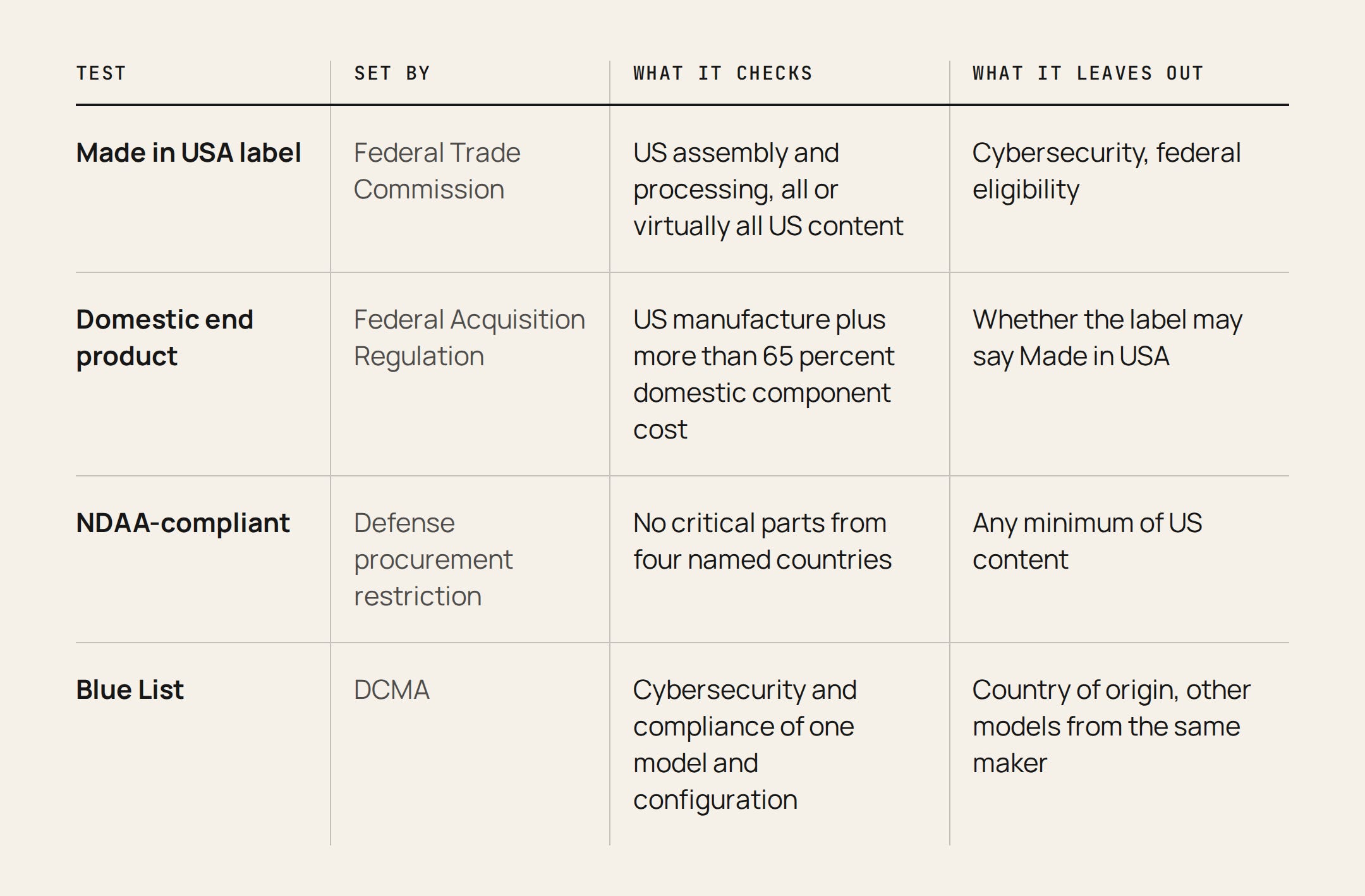
Read the table as four separate questions. A vendor can honestly answer yes to some and no to others, and each answer means something different to a buyer.
The documents a buyer can ask for
The Cybersecurity and Infrastructure Security Agency and the FBI published drone guidance for critical-infrastructure owners in January 2024. It tells buyers to “understand where UAS are manufactured and to what laws the manufacturer is subject to clarify security standards and assess supply chain risk,” in the guidance’s words.⁹
The same checklist asks buyers to review a drone’s privacy policy, including where its data is stored. It also recommends reviewing the software and hardware bills of materials for critical components.⁹ Those two lists name the code and the parts inside the drone. Each of the four tests depends on them.
The practical step is to ask each vendor four questions in writing:
Which origin claim does the product page make, and how does the product meet the FTC standard for that claim?
What share of component cost is domestic, if the buyer is a federal agency?
Where do the critical components come from, as shown in the hardware bill of materials?
Is this exact model and configuration on the Blue List, if a defense buyer requires it?
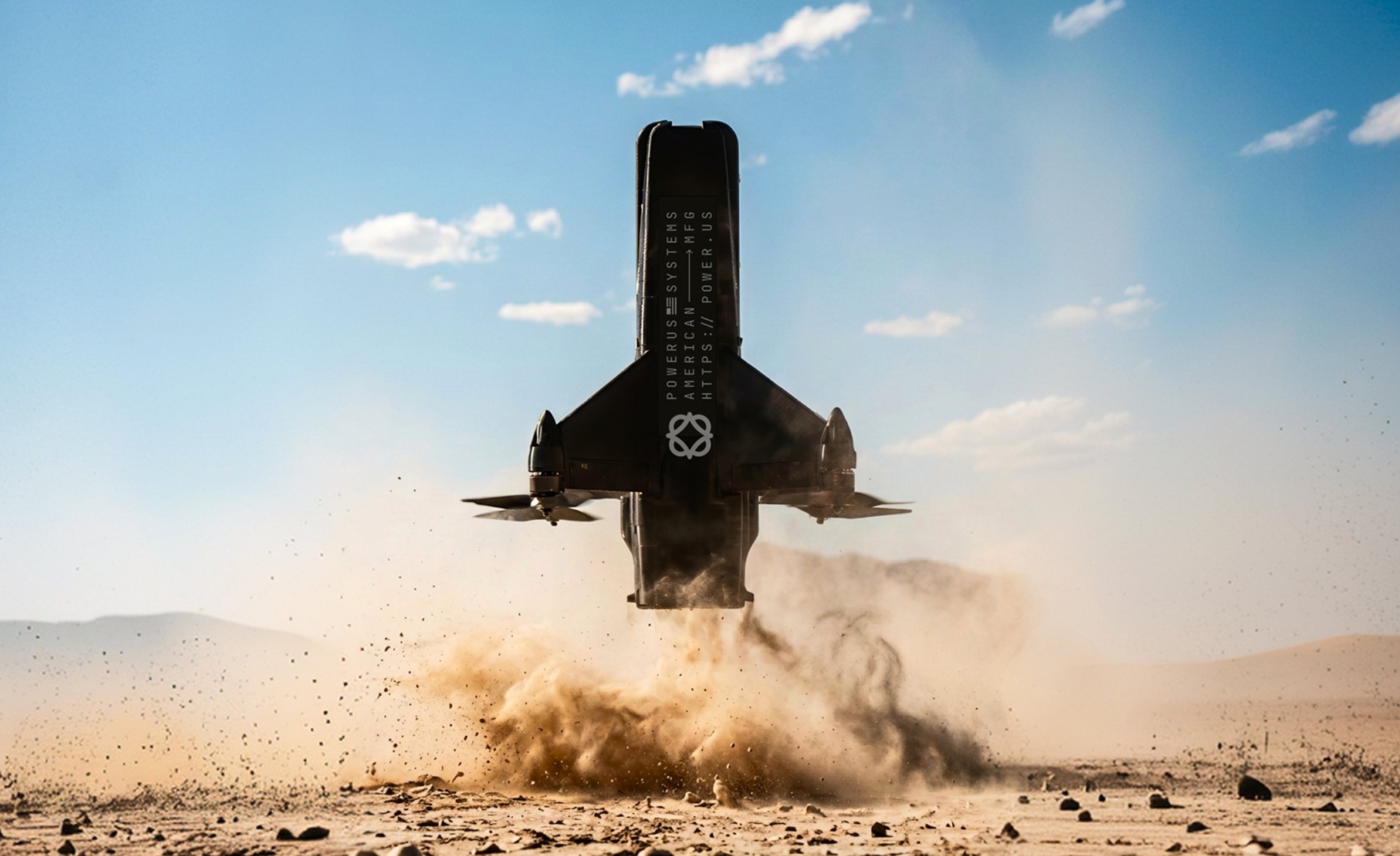
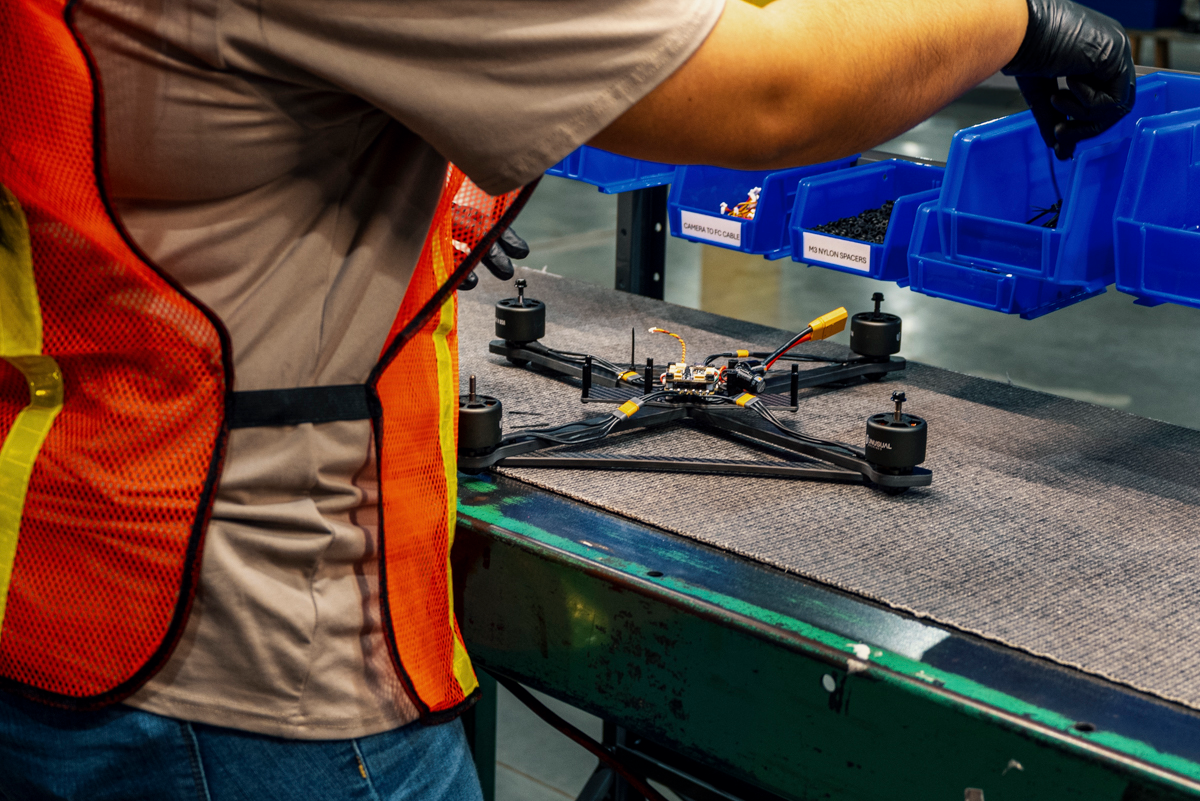
Vendors already describe their products in these terms. Powerus announced a counter-drone order on October 6, 2026. It states that the systems in that order “are manufactured in the United States using NDAA-compliant components,” in the announcement’s words.¹⁰ Its company page describes hardware manufactured in America, at scale, with manufacturing in Charlotte, North Carolina.¹¹
Frequently asked questions
What does made in USA mean for a drone?
For an unqualified label, the Federal Trade Commission’s rule requires US final assembly, all significant processing in the US, and all or virtually all components made and sourced in the US.² Federal purchasing and defense procurement use different tests.
Is a Blue UAS drone the same as a made in USA drone?
No. The Blue List vets specific models for cybersecurity and compliance, and it includes drones from manufacturers based outside the US.⁵ ⁸ US content is left to the other tests.
What does NDAA-compliant mean for a drone?
It means none of the drone’s critical components comes from China, Russia, Iran or North Korea, or from a company based there.⁴ The critical components include flight controllers, radios, cameras, gimbals, ground stations and operating software.
Can a drone with foreign parts be sold as made in USA?
Only if the foreign content is negligible. Otherwise a seller can use a qualified claim, such as “Made in USA of U.S. and imported parts,” or say “Assembled in USA” when the substantial assembly took place in the US.¹
Where does Powerus manufacture its systems?
Powerus gives its headquarters as Rock Hill, South Carolina and its manufacturing as Charlotte, North Carolina, on its company page.¹¹ It describes the systems in its October 6, 2026 counter-drone order as manufactured in the United States using NDAA-compliant components.¹⁰
Get the Test Named in Writing
A made in USA label can rest on four different standards: a labeling rule, a federal cost share, a parts restriction and a model-by-model security list. Each one answers a different question for a buyer.
A site buying drones should match the test to its own need. That might be a federal contract, a data-security policy or a supply-chain review. Ask the vendor to name the test, show the bill of materials behind it, and confirm the exact model and configuration.
¹ Federal Trade Commission, Complying with the Made in USA Standard, business guidance, July 2024.
² Made in USA Labeling Rule, 16 CFR 323.2, published July 14, 2021 (86 FR 37032), via Cornell Law School’s Legal Information Institute.
³ Federal Acquisition Regulation, 25.101, General, as amended by FAC 2026-01, effective March 13, 2026.
⁴ Defense Contract Management Agency, Blue List policy page, read October 12, 2026.
⁵ Defense Contract Management Agency, Blue List portal, Cleared List and Framework List, counted October 12, 2026.
⁶ Defense Contract Management Agency, Blue List frequently asked questions, read October 12, 2026.
⁷ Defense Innovation Unit, DIU’s Blue UAS List to Transition to DCMA, December 3, 2025.
⁸ Wingtra, company website, head office address, read October 12, 2026.
⁹ Cybersecurity and Infrastructure Security Agency and FBI, Cybersecurity Guidance: Chinese-Manufactured UAS, January 17, 2024.
¹⁰ Powerus Corporation, Powerus (Nasdaq: PUSA) Receives $82 Million Order for Counter-Unmanned Aerial Systems, October 6, 2026.
¹¹ Powerus, Company, read October 12, 2026.
¹² American Security Drone Act of 2023, sections 1821 to 1833 of the National Defense Authorization Act for Fiscal Year 2024, Public Law 118-31, approved December 22, 2023; implemented at FAR subpart 40.2, read October 14, 2026.